
This year, we crossed a threshold many of us had hoped would never come.
Not because the dangers to journalists suddenly intensified - they were already severe - but because the world around us began to absorb them with less surprise, less outrage, less urgency. The attacks, the harassment, the killing of colleagues have started to feel disturbingly routine.
Yet 2025 was not a year defined by resignation. In fact, it was the year in which our collective resolve became clearer.
What we feared might numb us instead sharpened us. The normalisation of threats forced a new level of honesty in how newsrooms talk about risk, how safety advisors plan deployments, and how our network responds when colleagues come under pressure. The bottom, when we reached it, turned out not to be a place of collapse but a point of focus.
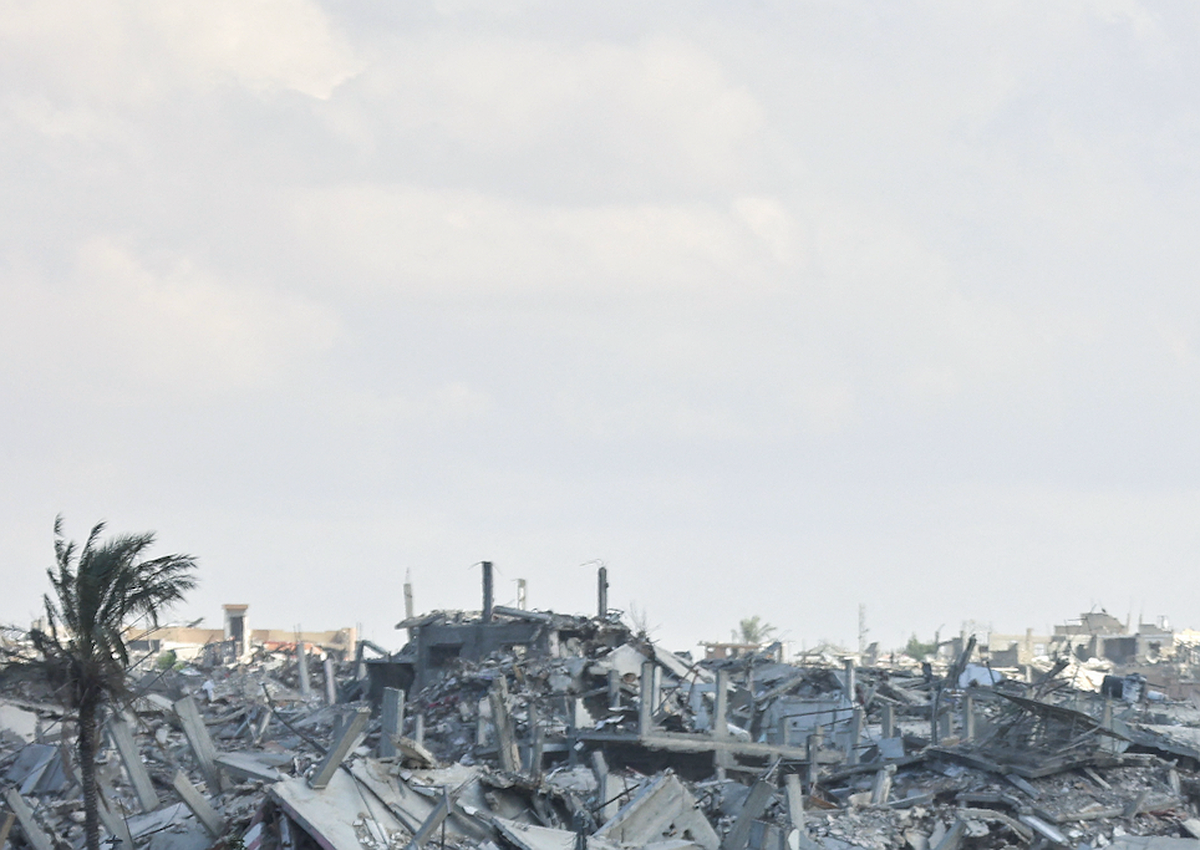
Across INSI’s global community, we saw a stronger, more coordinated instinct to push back against this new normal. Members exchanged information at unprecedented speed and depth - analysing the Iran-Israel war within hours, assessing wire-guided drone threats in Ukraine, unpacking the shifting safety landscape in post-Assad Syria, and preparing practically for what entering Gaza may require when borders eventually reopen.
Our in-person meetings in London, Paris and New York underlined something essential: when hostility towards journalists increases, professional solidarity becomes our strongest strategic asset. In these rooms, members set aside competition and worked through their most difficult challenges together - from kidnappings and injuries to legal threats, intimidation and bureaucratic obstruction.
The statements we issued on Gaza this year were another example of that unity. When colleagues were starving, or when journalists from Al Jazeera, Reuters and AP - all INSI members - were killed, the response was swift, coordinated and principled. It wasn’t activism; it was the profession standing up for its own.
We continued to build tools that strengthen that collective resilience: our Digital Defence guide in five languages, practical medical and safety guidance, and constant briefings that draw on the expertise of doctors, analysts, editors and colleagues on the ground. And through Killing the Messenger, we once again named every journalist whose life was taken - work made even more poignant by the loss of our longtime colleague Nick Mosdell, who dedicated more than two decades to ensuring these deaths were recorded with accuracy and dignity.
So yes, the environment has grown harsher.
Yes, the indifference in parts of the world is deeply troubling.
But 2025 has also been a year of clarity - the moment when illusion finally dropped away and we saw, without filters, what we are up against.
And from that low point, something resembling strength has begun to rebuild:
shared knowledge, coordinated action, a network that refuses to look away, and a renewed conviction that protecting journalists is not a side project of our profession - it is the condition for its survival.
It’s not optimism. It’s the refusal to accept that this is where the story ends. And so, together, we push back.
Read our annual report here.